
SDG 1 No Poverty
At the Agusan del Sur State College of Agriculture and Technology (ASSCAT), addressing poverty remains a key focus of our research and community engagement. Our work under SDG 1 aligns with global efforts to understand, mitigate, and ultimately eradicate poverty, particularly in low and lower-middle-income contexts.


- Overview
- Indicators and Progress
SDG 1 aims to eradicate extreme poverty in all its forms by ensuring that individuals and communities have the resources, opportunities, and social protections needed to live dignified and productive lives. Despite global advancements, poverty continues to affect millions, fueled by economic inequality, limited access to essential services, climate-related shocks, and conflict-driven displacement.
Achieving this goal requires more than income support—it calls for resilient systems that empower people to rise from vulnerability, access education and livelihood opportunities, and participate fully in economic growth. By strengthening social safety nets, expanding inclusive development programs, and investing in human capital, nations and institutions can create environments where no one is left behind. SDG 1 sets the foundation for all other development goals, affirming that sustainable progress begins with lifting people out of poverty.
Indicator 1.1.1 — Papers Co-authored with Low or Lower-Middle-Income Countries
Table 1. Papers Co-authored with Low or Lower-Middle-Income Countries
| Title of Paper / Research Output | Year of Publication | Name of Co-author(s) | Country of Co-author’s Institution | Country Income Classification |
|---|---|---|---|---|
| Socioeconomic Impacts of Mining’s Social Development and Management Program (SDMP) in Barobo, Surigao del Sur, Philippines Using a Propensity Score Matching Analysis | 2022 | Dr. Nancy S. Doloriel | Philippines | Lower-Middle |
| Assessing Timber Trade Middlemen for Development Policy Actions: A Case Study in the Caraga Region, Philippines | 2022 | Dr. Rodrigo L. Bongolan | Philippines | Lower-Middle |
Sample Data Summary
| Total Poverty-related Papers Published (A) | No. of Papers Co-authored with LMIC Institutions (B) | Proportion of Co-authored Papers (%) = (B ÷ A) × 100 | Interpretation |
|---|---|---|---|
| 2 | 2 | (2 ÷ 2) × 100 = 1% | 1% of total poverty-related research output involves collaboration with low or lower-middle-income countries. |
In alignment with the Times Higher Education (THE) Impact Rankings 2025 methodology, this indicator measures the university’s engagement in research collaborations with institutions located in low or lower-middle-income countries (LMICs). Such partnerships foster equitable research networks, capacity-building in developing regions, and shared solutions addressing poverty and sustainable development challenges.
For the reporting year 2023, the university recorded two (2) poverty-related research publications, both co-authored with scholars from lower-middle-income institutions, as shown in Table 1.
The first study, “Socioeconomic Impacts of Mining’s Social Development and Management Program (SDMP) in Barobo, Surigao del Sur, Philippines Using a Propensity Score Matching Analysis” (2022), was developed in collaboration with Dr. Nancy S. Doloriel, whose institution is located in a lower-middle-income country. The research evaluated the socioeconomic outcomes of mining-led social programs and their contributions to community welfare and development.
The second paper, “Assessing Timber Trade Middlemen for Development Policy Actions: A Case Study in the Caraga Region, Philippines” (2022), was co-authored with Dr. Rodrigo L. Bongolan, also affiliated with a lower-middle-income institution. This study analyzed the structure of intermediary trade in the timber industry and its implications for policy, livelihoods, and inclusive economic development.
Based on the summary data, the university achieved a 1% proportion of poverty-related publications co-authored with LMIC institutions in 2023. Although modest, this figure underscores the institution’s continuing efforts to strengthen research cooperation with developing regions. These partnerships enhance knowledge exchange, joint publication, coordinated fieldwork, and the creation of context-specific development insights.
The university recognizes that sustained collaboration with LMIC partners is crucial for producing relevant, inclusive, and solution-oriented research. Moving forward, ASSCAT aims to expand its research network with low and lower-middle-income countries, advancing global academic solidarity and contributing meaningfully to SDG 1: No Poverty and the objectives of the THE Impact Rankings 2025.
Indicator 1.1.2 — Field-Weighted Citation Impact (FWCI)
Table 1. List of Poverty-Related Publications (2022)
| Title of Publication | Year | Type of Publication | No. of Citations | Expected Citations (Global Avg) | FWCI |
|---|---|---|---|---|---|
| Socioeconomic Impacts of Mining’s Social Development and Management Program (SDMP) in Barobo, Surigao Del Sur, Philippines Using a Propensity Score Matching Analysis | 2022 | Journal Article | 5 | 30 | 0.17 |
| Assessing Timber Trade Middlemen for Development Policy Actions: A Case Study in the Caraga Region, Philippines | 2022 | Journal Article | 3 | 20 | 0.15 |
Summary Table
| Year | Total Number of Poverty-Related Publications | Interpretation |
|---|---|---|
| 2022 | 2 | Limited institutional engagement in poverty research |
Indicator 1.2.1 — Proportion of Low-Income Students Receiving Financial Aid
Table 1. Proportion of Low-Income Students Receiving Financial Aid (CY 2024)
| Indicator | Number of Students |
|---|---|
| Total Full-Time Equivalent (FTE) Students | 6,732 |
| Low-Income Students Receiving Financial Aid | 2,314 |
| Percentage | 34.37% |
Summary and Computation
| Indicator | Value |
|---|---|
| Total Number of Publications (A) | 2 |
| Sum of FWCI Values (B) | 0.32 |
| Average FWCI (B ÷ A) | 0.16 |
Interpretation:
The average FWCI of 0.16 indicates that the university’s poverty-related research outputs were cited less frequently than the global average in 2022.
Analysis and Context
The Field-Weighted Citation Impact (FWCI) measures research influence by comparing the number of citations a publication receives to the expected number of citations for similar documents worldwide. An FWCI of 1.0 represents performance at the global average; values above 1.0 indicate higher-than-average citation impact, while values below 1.0 suggest lower visibility on the international stage.
For 2022, ASSCAT produced two poverty-related publications analyzed under this indicator:
- “Socioeconomic Impacts of Mining’s Social Development and Management Program (SDMP) in Barobo, Surigao Del Sur, Philippines Using a Propensity Score Matching Analysis”
- Citations: 5
- Expected Citations: 30
- FWCI: 0.17
This study examined the socioeconomic effects of mining-led community development initiatives.
- “Assessing Timber Trade Middlemen for Development Policy Actions: A Case Study in the Caraga Region, Philippines”
- Citations: 3
- Expected Citations: 20
- FWCI: 0.15
This paper analyzed the economic role of timber trade intermediaries in local development.
With a combined FWCI sum of 0.32 and an average of 0.16, the data indicates that while ASSCAT is actively producing research aligned with SDG 1, its poverty-related publications are not yet achieving strong international citation impact.
Recommendations:
Participate actively in global research networks to boost citation potential.
Strengthen international collaborations to increase visibility.
Target high-impact journals for poverty-related research.
ASSCAT’s average FWCI of 0.16 reflects a growing but modest engagement in globally recognized poverty research. Continued efforts in research quality, dissemination, and international partnerships are essential to enhance the university’s contribution to the global discourse on poverty reduction and sustainable development.
Indicator 1.1.3 — Publications on Poverty
Table 1. Poverty-Related Publications (2022)
| Year | Total Number of Poverty-Related Publications | Interpretation |
|---|---|---|
| 2022 | 2 | Limited institutional engagement in poverty research |
Analysis and Context
The Publications on Poverty (Indicator 1.1.3) measures the volume of research outputs focused on poverty and socioeconomic development. This indicator reflects how extensively the institution contributes to academic discourse on Sustainable Development Goal (SDG) 1: No Poverty, without normalizing for institutional size. It highlights both the presence and scale of poverty-related research.
For 2022, ASSCAT produced two journal articles addressing income poverty:
- “Socioeconomic Impacts of Mining’s Social Development and Management Program (SDMP) in Barobo, Surigao Del Sur, Philippines Using a Propensity Score Matching Analysis”
- Published in the Journal of Positive School Psychology.
- Examined how mining’s social development programs influence economic well-being and livelihood opportunities in local communities.
- Provided empirical insights on poverty alleviation in resource-dependent areas through corporate social responsibility initiatives.
- “Assessing Timber Trade Middlemen for Development Policy Actions: A Case Study in the Caraga Region, Philippines”
- Published in Humanities and Social Sciences Communications.
- Focused on income poverty by analyzing the role of intermediaries in the timber trade and their impact on local economic conditions.
- Offered policy-relevant insights for improving the welfare of workers and small-scale traders.
Although these publications demonstrate the university’s engagement with poverty-related research, the limited number of outputs indicates that institutional participation in this thematic area remains modest. This underscores the need to expand research productivity in poverty studies to enhance both regional impact and international visibility.
Recommendations for Improvement
- Encourage faculty and student-led research projects on poverty reduction and socioeconomic development.
- Promote interdisciplinary studies linking poverty with health, education, governance, and environment.
- Increase publications in indexed, high-impact journals to enhance visibility and citation potential.
- Foster local and international research collaborations to broaden the scope and reach of poverty-focused research.
While ASSCAT’s two poverty-related publications in 2022 provide a foundation for SDG 1 research, there remains significant opportunity to strengthen and scale institutional engagement. By strategically increasing research outputs and partnerships, the university can contribute more substantially to global discourse on poverty alleviation and sustainable, inclusive development.
Indicator 1.2.1 — Proportion of Low-Income Students Receiving Financial Aid (CY 2024)
Table 1. Proportion of Low-Income Students Receiving Financial Aid (CY 2024)
| Indicator | Number of Students | Percentage |
|---|---|---|
| Total Full-Time Equivalent (FTE) Students | 6,732 | – |
| Low-Income Students Receiving Financial Aid | 2,314 | 34.37% |
Analysis and Context
In Calendar Year 2024, the Agusan del Sur State College of Agriculture and Technology (ASSCAT) reinforced its commitment to providing equitable access to higher education, particularly for students from low-income and financially disadvantaged households. Recognizing poverty as a persistent barrier to educational attainment, ASSCAT ensures that a wide array of scholarship and financial aid programs are available to learners who require support to pursue and complete their degrees.
Out of 6,732 full-time equivalent students, 2,314 students benefited from financial aid programs targeted at low-income groups, representing 34.37% of the student population. This indicates that nearly one in three students received substantial support, demonstrating ASSCAT’s proactive approach in mitigating the effects of economic hardship on educational participation.
Sources of Financial Support:
- Government-Funded Programs (CHED)
- Tertiary Education Subsidy (TES) and TES–Tulong Dunong Program (TES-TDP) provided essential funding for tuition, school materials, and basic living expenses, supporting over 2,000 students.
- Additional CHED initiatives, including CMSP Full and Half SSP and TDP-SUCs grants, extended support to academically deserving but financially challenged learners.
- National, Local, and Private Partnerships
- Provincial Government of Agusan del Sur (PGAS) scholarship programs catered to Indigenous Peoples (IPs), Persons with Disabilities (PWDs), and other marginalized sectors.
- Sectoral Scholarships such as ACEF Grant, Coconut Scholarship (CoScho), and DOST S&T Scholarship supported students from farming families and other vulnerable groups.
- Private Foundations (Ayala Foundation, Gokongwei Brothers Foundation, Philsaga Mining Corporation, LANDBANK Countryside Development Foundation Inc.) further supplemented financial assistance through stipends and grants.
Impact and Significance
ASSCAT’s financial aid framework in CY 2024 demonstrates a strong institutional dedication to inclusive education and socioeconomic equity. By supporting nearly one-third of its student population through targeted financial interventions, the College actively reduces economic barriers, empowering marginalized learners to pursue tertiary education successfully.
These efforts contribute directly to:
- SDG 1: No Poverty – by alleviating economic constraints for low-income students.
- SDG 4: Quality Education – by ensuring equitable access and enhancing retention and graduation rates among financially disadvantaged learners.
The proportion of low-income students receiving financial aid reflects ASSCAT’s sustained commitment to inclusive, equitable, and accessible higher education. By leveraging government, local, and private support, the College enables students to focus on academic achievement and personal development, fostering a new generation of competent, resilient, and socially responsible graduates capable of contributing meaningfully to regional and national development.
Indicator 1.3.1 — Bottom Financial Quintile Admission Target
In 2024, the Agusan del Sur State College of Agriculture and Technology (ASSCAT) actively strengthened its policies and admission strategies to support students belonging to the bottom 20% of household income groups. This includes priority consideration for marginalized and underrepresented sectors such as Pantawid Pamilyang Pilipino Program (4Ps) beneficiaries, persons with disabilities (PWDs), and Indigenous Peoples (IPs). These initiatives reaffirm the College’s commitment to providing equitable, inclusive, and accessible higher education opportunities, ensuring that financial hardships do not hinder capable students from entering tertiary education.
Inclusive Admission Framework
To manage and support applications from low-income learners, ASSCAT utilized a Pre-Admission System, which serves as an institutional mechanism to receive, validate, and track student applications. In 2024, this system recorded a 166.6% increase in applications received compared to the institutional target—a strong indication of the system’s accessibility and the effectiveness of ASSCAT’s outreach efforts.
According to the College Admission Test (CAT) Attendance Report for AY 2023–2024, all pre-admission applications were processed successfully. While 27% of applicants did not proceed to take the CAT due to duplicate accounts or withdrawn applications, the Pre-Admission Certification for First Semester, AY 2024–2025 confirms that all qualified CAT takers who met the criteria were admitted in accordance with College policies.
Targeted Admission Support for Underrepresented Groups
ASSCAT also implemented specific support mechanisms to ensure fair access for vulnerable and marginalized populations. These include:
- Persons with Disabilities (PWDs)
5% of admitted students were persons with disabilities. They were granted free admission benefits, helping ensure that physical or learning challenges did not become barriers to college entry. - Honor Graduates from Senior/Junior High School
10% of admitted students were honor graduates, identified through the Guidance Office’s student inventory. Many of these learners are from low-income or financially constrained households, and priority admission ensures continued academic support. - Indigenous Peoples (IPs)
10% of admitted students identified as members of Indigenous communities—surpassing the institutional target by 17%. This achievement highlights ASSCAT’s strong commitment to cultural inclusivity, empowerment, and providing educational pathways for historically marginalized groups.
Overall Admission Performance for CY 2024
In total, 2,133 low-income students were admitted in 2024. This figure demonstrates ASSCAT’s strong institutional performance in achieving its admission target for students from the bottom financial quintile, underscoring long-term strategies that promote equitable access, social mobility, and poverty reduction.
The College ensures that these admission efforts are publicly accessible and verifiable. Official posts on the ASSCAT Facebook page and the ASSCAT Office of Student Affairs and Services (OSAS) page provide transparent documentation of the institution’s inclusive admission practices.
Institutional Commitment to SDG 1 and SDG 4
Through sustained policy efforts, data-driven admission systems, and strong support for marginalized groups, ASSCAT embodies key values of equity, inclusivity, accessibility, and academic excellence. Prioritizing students from the lowest income sectors supports the broader national agenda on poverty alleviation and social equity, while aligning with SDG 1 (No Poverty) and SDG 4 (Quality Education). ASSCAT’s approach ensures that talented and deserving students—regardless of financial circumstances—gain access to quality higher education and opportunities for long-term socioeconomic advancement.
Evidence
Title: ASSCAT’s initiatives in 2024 to increase access for students from the bottom 20% of household income groups, including marginalized and underrepresented sectors.
Public Posting via ASSCAT OSAS Facebook Page
Indicator 1.3.2 — Bottom Financial Quintile Student Success
Agusan del Sur State College of Agriculture and Technology (ASSCAT) upholds its mission of fostering inclusive and equitable access to quality education, particularly for students belonging to the bottom 20% of household income groups. The institution maintains clear and measurable graduation and completion targets for low-income learners to ensure that poverty, geographic isolation, or socio-economic disadvantage does not hinder their ability to complete higher education. This operationalizes the commitments of SDG 1 (No Poverty) and SDG 4 (Quality Education) in a concrete and measurable way.
Graduation Outcomes for Low-Income Students (AY 2023–2024)
For Academic Year 2023–2024, ASSCAT recorded a total of 1,042 graduates, of which 1,007 students (96.64%) were identified as coming from low-income households. These students include:
- Tertiary Education Subsidy (TES) beneficiaries
- Pantawid Pamilyang Pilipino Program (4Ps) grantees
- Indigenous Peoples (IPs)
- Other financially disadvantaged groups
ASSCAT initially set a minimum target of 95% graduation/completion for students from the bottom financial quintile. With a 96.64% completion rate, the institution successfully exceeded its target, demonstrating effective implementation of its equity-focused academic support framework.
Institutional Support Mechanisms Driving Student Success
ASSCAT’s strong performance is supported by a comprehensive range of academic, financial, and psychosocial interventions:
1. Universal Access to Quality Tertiary Education (RA 10931)
Under the Free Higher Education Law, all qualified enrollees receive:
- Free tuition
- Free miscellaneous and other school fees
This removes one of the most common financial barriers to graduation.
2. Priority Access to Financial Assistance for Low-Income Learners
Students belonging to the bottom income quintile are prioritized for:
- Tertiary Education Subsidy (TES)
- 4Ps-linked educational grants
- Other government and institutional aid programs
These supports help sustain learning materials, transportation, food allowance, and other living expenses essential for academic continuity.
3. Guidance and Counseling Support
The Guidance and Counseling Services Unit provides:
- Regular academic advising
- Psychological and emotional support
- Retention monitoring
- Intervention referrals
This system plays a critical role in keeping at-risk learners engaged until completion.
4. Support for Indigenous Peoples (IPs) and Persons with Disabilities (PWDs)
ASSCAT implements targeted interventions, including:
- Scholarships and stipends
- Customized academic support
- Inclusive learning accommodations
These ensure that IP and PWD learners graduate at equitable rates.
Monitoring and Institutional Accountability
The Graduation Report on Low-Income Student Completion (2nd Semester, AY 2023–2024) serves as the official evidence of ASSCAT’s success. The report documents the exact number of graduates and completion rates, confirming that:
- 1,042 total students graduated
- 1,007 belonged to low-income households
- Completion rate: 96.64%
- Target achieved and exceeded: 95% → 96.64%
These results highlight the institution’s effective monitoring system, particularly for financially disadvantaged learners.
Impact and Alignment with SDG Goals
ASSCAT’s sustained commitment to student retention, affordability, and success contributes significantly to national and global goals for poverty reduction and educational equity. By ensuring that learners from the poorest households can enter, persist, and graduate from higher education, ASSCAT strengthens social mobility and supports the economic development of Agusan del Sur and the broader Caraga Region.
The results from AY 2023–2024 demonstrate that ASSCAT’s inclusive education model is effective, scalable, and sustainable. By setting clear targets, expanding support systems, and monitoring outcomes, the institution ensures that students from the bottom financial quintile can achieve their academic and professional aspirations.
Evidence
Indicator 1.3.3 — Low-Income Student Support
Agusan del Sur State College of Agriculture and Technology (ASSCAT) maintains a strong institutional commitment to equity, inclusion, and student success by delivering comprehensive support programs specifically designed for students from low-income households. Recognizing that financial hardship is a major contributor to student attrition, the College implements targeted interventions—such as free food, housing, transportation, and welfare assistance—to ensure that students from economically disadvantaged backgrounds are able to stay in school and successfully complete their degree programs.
Flagship Support Program for Low-Income Students
For Calendar Year 2024, one of ASSCAT’s most significant welfare interventions is the Provincial Government of Agusan del Sur Indigenous People Full-Blooded Native (PGAS-FBN) Scholarship Program. This strategic partnership between the College and the Provincial Government provides comprehensive living and academic support to students who belong to the poorest and most marginalized sectors, particularly full-blooded Indigenous Peoples (IPs) from geographically isolated and disadvantaged areas.
The PGAS-FBN Scholarship Program provides the following direct support:
- Free board and lodging for the entire academic year
- Daily meal support to ensure food security
- Book allowance and academic materials
- Student welfare monitoring through the ASSCAT Student Scholarship Office
- Psychosocial and academic guidance to support well-being and retention
In 2024, 25 full-blooded IP scholars benefited from the program, enabling them to pursue their studies without the burden of daily living expenses. Many of these scholars are first-generation learners, and the program’s holistic support significantly contributes to improved retention, academic performance, and long-term socio-economic mobility.
Alignment with National Policy and Institutional Mandates
The initiative strongly reinforces ASSCAT’s compliance with Republic Act No. 10931 (Universal Access to Quality Tertiary Education Act), which mandates the removal of financial barriers to higher education. By reducing ancillary costs and providing essential welfare services, the College ensures that students from the lowest financial quintile can continue their education regardless of their economic circumstances.
Monitoring, Accountability, and Institutional Collaboration
ASSCAT ensures transparent and accountable implementation of the scholarship program through:
- Regular submission of billing and accommodation reports
- Coordination with the Provincial Government scholarship unit
- Continuous monitoring of scholar welfare and academic progress
- Public visibility of scholarship initiatives through official Facebook posts
These mechanisms ensure that resources are properly allocated and that scholars receive the intended support throughout their stay at the College.
Impact and Contribution to SDG 1
The PGAS-FBN Scholarship Program represents a best-practice model of university-led poverty alleviation, demonstrating how coordinated local government and higher education partnerships can equip marginalized communities with the tools for long-term development. Through sustained welfare interventions—food, housing, allowances, and psychosocial support—ASSCAT effectively reduces the impact of poverty on student learning and progression.
By prioritizing vulnerable and low-income sectors such as Indigenous Peoples, ASSCAT strengthens pathways for educational empowerment and contributes to broader national and global goals of social equity and inclusive development.
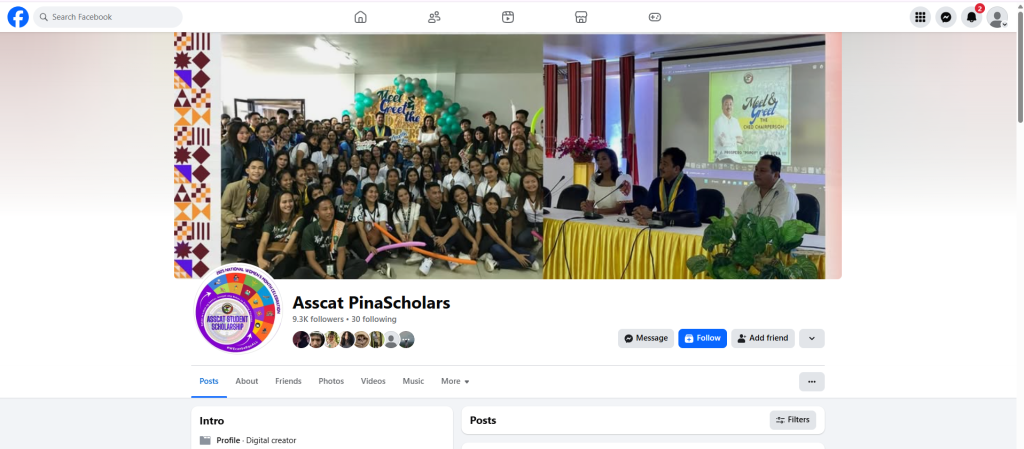
Evidence
Title: ASSCAT programs and initiatives supporting students from the bottom 20% of household income groups, highlighting inclusive higher education and targeted student support in 2024.
Public Posting: https://www.facebook.com/joanmpislan
Indicator 1.3.4 — Bottom Financial Quintile Student Support
Aligned with the Times Higher Education (THE) Impact Rankings 2025 framework for SDG 1: No Poverty, ASSCAT implements a comprehensive and multi-layered support system specifically designed to assist students from the bottom 20% of household income groups in completing their tertiary education. In 2024, the institution demonstrated a strong and sustained commitment to inclusive higher education by deploying 19 scholarship and financial aid initiatives benefiting a total of 2,133 low-income students.
These programs—funded through national government agencies, local government units, private foundations, and industry partners—collectively remove financial barriers that typically hinder access, retention, and graduation among students from marginalized communities, including 4Ps beneficiaries, Indigenous Peoples (IPs), smallholder farmers, coconut workers, persons with disabilities (PWDs), and first-generation learners.
Major National Government Scholarships Supporting Bottom Quintile Students
1. Tertiary Education Subsidy (TES) and Tulong Dunong Program (TES–TDP)
Administered by the Commission on Higher Education (CHED), these two flagship national programs provided ₱10,000 per semester to qualified students identified under the 4Ps and IP categories.
- TES + TES-TDP beneficiaries in 2024: 1,690 low-income students
The subsidies helped cover allowances, school supplies, transportation, and basic living expenses, ensuring sustained enrollment and academic continuity.
Targeted Sectoral Scholarships Supporting Vulnerable Rural Communities
2. Agricultural Competitiveness Enhancement Fund (ACEF)
Supports children of smallholder farmers—one of the region’s most vulnerable sectors—by granting ₱20,000 to ₱40,000 per semester for tuition, stipends, and academic needs.
3. Coconut Farmers and Their Families Scholarship (CoScho)
Provides comprehensive financial assistance to children of coconut farm workers, including stipends and laptop support, directly addressing rural poverty and agricultural sector inequities.
Private Foundation and Industry-Supported Scholarships
These partnerships reflect the institution’s strong engagement with private sector stakeholders committed to empowering marginalized student populations.
- U-Go Ayala Foundation Scholarship – prioritizes women empowerment
- Gokongwei Brothers Foundation (GBF) TeachSTEM Scholarship – supports future teachers from poor households
- Rock Diwata Builders, Inc. (RDBI) Scholarship – assists students from under-resourced communities
These programs offered financial support ranging from ₱3,000 to ₱45,000 per semester, enabling scholars to continue their studies without financial distress.
Local Government–Funded Scholarships (PGAS)
The Provincial Government of Agusan del Sur sustained multiple inclusive education programs in partnership with ASSCAT:
- PGAS-FBN (Full-Blooded Native Scholars)
- PGAS-EBDSP (Expanded Baccalaureate Degree Scholarship Program)
- PGAS-PWD (Persons with Disability Scholarship)
These locally funded scholarships provided ₱2,000–₱3,000 monthly stipends, directly supporting Indigenous Peoples and learners with disabilities—two priority sectors in poverty alleviation and social mobility.
Specialized and Sector-Specific Scholarship Support
Iskolar ng LANDBANK Program (ILP)
Assists children of agrarian reform beneficiaries and small farmers.
Philsaga Mining Corporation SDMP Scholarships
Supports residents of mining communities through educational subsidies and allowances.
Department of Science and Technology (DOST) S&T Scholarship
Provides ₱8,000 monthly stipends and ₱5,000 book allowances to low-income students with strong aptitude in science and mathematics.
Institutional Commitment and Impact
These 19 integrated scholarship and assistance programs collectively demonstrate ASSCAT’s holistic approach to empowering students from the bottom financial quintile. Each program is structured to:
- Support access through tuition-free enrolment and subsidies
- Strengthen retention through stipends, meals, housing, books, and psychosocial support
- Enhance completion rates through continuous monitoring and guidance
- Promote upward social mobility among marginalized and rural learners
By ensuring that economic constraints do not limit educational attainment, ASSCAT significantly contributes to SDG 1 (No Poverty) and national objectives on inclusive development. The institution’s robust scholarship ecosystem reflects a strong culture of partnership-building, resource mobilization, and sustained student-centered support.
Evidence
Title: ASSCAT programs and initiatives supporting students from the bottom 20% of household income groups
Public Posting: https://www.facebook.com/photo.php?fbid=812937974343617&set=pb.100068822666256.-2207520000&type=3
Indicator 1.3.5 — Low or Lower-Middle Income Countries (LMIC) Student Support
For the reporting year 2024, Agusan del Sur State College of Agriculture and Technology (ASSCAT) demonstrates its strong institutional commitment to inclusive and equitable higher education by providing comprehensive financial support schemes aimed at assisting students from low-income and economically vulnerable backgrounds. As a State University and College (SUC), ASSCAT implements the national mandate under Republic Act No. 10931 (Universal Access to Quality Tertiary Education Act), ensuring that all enrolled students automatically receive free tuition and exemption from all other school fees. This policy removes the financial obstacles that commonly hinder access to higher education in low- and lower-middle income contexts.
While the majority of ASSCAT students are domestic, the institution’s financial aid programs directly model the type of support typically required by students from Low-Income Countries (LICs) and Lower-Middle Income Countries (LMICs). These support schemes demonstrate the university’s existing capacity to provide holistic assistance should international LMIC students enroll in the future.
1. Free Tuition and Mandatory Fees Coverage
All qualified students benefit from 100% free tuition and exemption from miscellaneous fees. This structure is aligned with global equity standards for supporting learners from low-resource settings and contributes to poverty reduction through education access.
2. Targeted Financial Aid for Economically Disadvantaged Students
ASSCAT implements multiple scholarship and subsidy programs that emulate international student-support mechanisms typically offered to students from LICs and LMICs:
a. Tertiary Education Subsidy (TES)
- Provides allowances covering books, supplies, transportation, and essential student needs.
- Prioritizes 4Ps beneficiaries, Indigenous Peoples (IPs), and persons with disabilities (PWDs)—groups that mirror marginalized demographics in LMIC education systems.
b. Institutional and Government-Funded Grants
Through collaborations with CHED, LGUs, and national agencies, ASSCAT delivers a broad ecosystem of scholarships that provide:
- stipends
- book and supply allowances
- living support (board and lodging assistance)
- specialized grants for vulnerable marginalized groups
These support structures demonstrate ASSCAT’s ability to integrate academic subsidies with basic welfare support—an essential requirement for LMIC student retention and completion.
3. Alignment With Global Poverty-Reduction and Education Mandates
ASSCAT’s financial assistance programs support the objectives of:
- SDG 1: No Poverty
- SDG 4: Quality Education
- CHED policies on inclusive tertiary education
By ensuring that cost is not a barrier to completing higher education, ASSCAT contributes meaningfully to social mobility, poverty alleviation, and equitable access to learning opportunities—core priorities for developing countries.
4. Readiness to Support LMIC International Students
While no dedicated programs for foreign LMIC students are currently in place, ASSCAT acknowledges both the need and the institutional readiness to extend its financial support mechanisms to international learners in the future. The university’s extensive experience in administering grants for domestic low-income populations provides a strong operational framework for:
- tuition waivers for LMIC students
- international scholarship partnerships
- living stipends and welfare support
- bilateral or development-agency funded scholarships
- cross-border academic mobility programs targeting LIC/LMIC populations
ASSCAT’s internationalization agenda under the Office of International Relations and External Linkages (IRELAO) creates a pathway for future partnerships that will enable the institution to host and support poor students from other developing countries.
Through its national subsidy programs, institutional financial aid schemes, and operational readiness to expand support to international LMIC students, ASSCAT demonstrates a robust, equity-centered approach to accessible and inclusive higher education. These efforts reflect the university’s ongoing commitment to eliminating financial barriers and ensuring that students—regardless of economic origin or nationality—can successfully complete their studies and participate in socio-economic transformation.
Evidence
Title: ASSCAT Financial Aid Programs for Low-Income Students
Public Posting: https://asscat.edu.ph/?s=scholarship
Indicator 1.4.1 — Local Start-Up Assistance
In alignment with the Times Higher Education (THE) Impact Rankings 2025 framework—particularly SDG 1: No Poverty and SDG 8: Decent Work and Economic Growth—Agusan del Sur State College of Agriculture and Technology (ASSCAT) actively supports community-based entrepreneurship initiatives aimed at marginalized and low-income groups.
2024 Initiative: Vertical Farming for Lettuce Cultivation
A flagship program demonstrating this commitment is the “Vertical Farming Innovations for Maximizing Lettuce (Lactuca sativa) Yield: A Practical Extension Initiative.”
- Background:
- Anchored on the research project “Evaluation of Lettuce (Lactuca sativa) Growth and Yield Vertically Using Non-Circulating Hydroponic System.”
- Implemented by BTLED Department faculty in collaboration with the Barangay Local Government Unit (BLGU) of Nueva Era, Bunawan, Agusan del Sur from May 28 to June 6, 2024.
- Objectives:
- Strengthen community resilience through sustainable agricultural entrepreneurship.
- Empower homemakers, women, and out-of-school youth to establish small-scale hydroponic farming ventures.
- Enhance household nutrition and income generation through sustainable practices.
- Program Design and Activities:
- Three-day intensive training: lectures, field demonstrations, and collaborative workshops.
- Hands-on practice: vertical garden construction, nutrient management, and plant maintenance.
- Support materials: distribution of lettuce seedlings, instructional manuals, and startup guidance for participants’ own hydroponic setups.
- Outcomes and Impact:
- Enabled participants to start sustainable microenterprises in hydroponic lettuce production.
- Promoted adoption of eco-friendly, land- and water-efficient farming techniques.
- Strengthened the link between academic research and community development, demonstrating inclusive economic growth through education.
Significance
This initiative exemplifies ASSCAT’s role in fostering local entrepreneurship and poverty alleviation by:
- Translating research into practical, community-centered applications.
- Building local capacities for sustainable, financially and socially viable business ventures.
- Supporting food security and income generation for low-income households.
- Establishing a replicable model for future collaboration with government agencies, local businesses, and NGOs.
Through programs like this, ASSCAT continues to drive regional development and advance SDG 1 by promoting inclusive, knowledge-based economic empowerment.
Evidence:
- Project Title: Vertical Farming Innovations for Maximizing Lettuce (Lactuca sativa) Yield: A Practical Extension Initiative
Indicator 1.4.2 — Local Start-Up Financial Assistance
In alignment with SDG 1: No Poverty and SDG 8: Decent Work and Economic Growth, the Agusan del Sur State College of Agriculture and Technology (ASSCAT) provided financial assistance to local community members to support the establishment of sustainable businesses in 2024.
2024 Initiative: Setting Up an Online Store / Platform Using Canva and Social Media
- Background:
- Outreach program implemented in Barangay Bunawan Brook, Bunawan, Agusan del Sur.
- Anchored on the research study “Opinion Mining: Cancel Culture of Businesses in Social Media”, which informed training modules and mentorship approaches.
- Objectives:
- Empower local entrepreneurs, particularly housewives and young business aspirants, to establish and manage online businesses.
- Provide financial support, digital tools, and technical knowledge for sustainable online entrepreneurship.
- Program Design and Activities:
- Financial Assistance: ₱10,000 in-kind seed support per group, including Canva templates, digital tools, and mentorship.
- One-day intensive training:
- Interactive lectures, hands-on workshops, and mentoring sessions.
- Guidance on digital content design, online store setup, product branding, customer engagement, and business performance tracking.
- Financial literacy modules covering budgeting, pricing, and revenue management.
- Participants: 110 local residents, primarily housewives and young entrepreneurs from low-income households, selected in coordination with the Barangay Local Government Unit (BLGU).
- Outputs:
- Development of prototype online stores as practical exercises and foundations for real businesses.
- Comprehensive training manuals, activity reports, and evaluation summaries prepared by faculty and research staff.
Outcomes and Impact
- Participants acquired technical skills in online business management and digital entrepreneurship.
- Beneficiaries gained confidence, creativity, and entrepreneurial self-reliance.
- Access to digital tools enabled low-income participants to launch businesses with minimal startup costs.
- Enhanced community collaboration and networking among local entrepreneurs, fostering mutual mentorship and knowledge sharing.
- Program contributed to household income generation and sustainable livelihoods while promoting digital economy participation.
Significance
This initiative reflects ASSCAT’s commitment to sustainable community development by:
- Providing both financial and technical support for local start-ups.
- Translating academic research into tangible economic empowerment.
- Promoting inclusive growth, social impact, and long-term sustainability in marginalized communities.
By implementing this program, ASSCAT demonstrates the effective intersection of research, education, and community engagement, advancing SDG 1 and SDG 8 at the local level.
Evidence:
Indicator 1.4.3 — Programs for Services Access
In 2024, the Agusan del Sur State College of Agriculture and Technology (ASSCAT) actively organized training programs and extension initiatives designed to improve access to basic services in local communities. These programs directly contribute to household food security, nutrition, and sustainable livelihoods, exemplifying the university’s commitment to inclusive community development.
2024 Initiative: ASSCAT-RIDE Extension Initiative Phase 2
- Project Title: Enriching Backyard Gardening: Optimizing Bitter Gourd (Momordica charantia L.) cv. Sta. Rita Yield and Quality with Gibberellic Acid and Vermicompost
- Collaboration: Barangay Local Government Unit (BLGU) of Nueva Era, Bunawan, Agusan del Sur
- Target Beneficiaries: Farmers, out-of-school youth, and homemakers from low-income households engaged in backyard gardening
Objectives
- Train participants in sustainable backyard gardening techniques using Gibberellic Acid (GA₃) and vermicompost to increase yield and quality.
- Enhance household nutrition and food security.
- Strengthen community partnerships and networks.
- Improve practical skills in vegetable production for supplemental family income.
Program Activities
- Three-day intensive training including:
- Hands-on demonstrations and interactive workshops.
- Distribution of starter kits for bitter gourd cultivation.
- Guidance on GA₃ and vermicompost application, planting high-yield varieties, and sustainable gardening practices.
- Training in post-harvest care, organic farming, and resource management.
- Facilitators: Faculty, research staff, and student volunteers
Outcomes and Impact
- Improved access to basic services in nutrition and household food production.
- Beneficiaries gained practical skills, self-reliance, and confidence to enhance livelihoods.
- Promotion of eco-friendly, cost-effective agricultural practices contributing to sustainable development.
- Strengthened community resilience and food security, supporting broader SDG objectives:
- SDG 1: No Poverty
- SDG 2: Zero Hunger
- SDG 3: Good Health and Well-being
- SDG 12: Responsible Consumption and Production
- SDG 13: Climate Action
Evidence
- Project Documentation: Training reports, attendance sheets, and photo records.
Indicator 1.4.4 — Policy Addressing Poverty
Agusan del Sur State College of Agriculture and Technology (ASSCAT) actively participated in policy-making and program implementation aimed at reducing poverty in all its dimensions through the outreach initiative:
“The Giant Swamp Taro 3 PRO’s (PROmote, PROtect, and PROduce)”
Collaboration and Partners
- Local Government Units (LGUs): Sta. Josefa, Trento, and Esperanza, Agusan del Sur
- University Team: Faculty, research staff, and student volunteers
- Target Beneficiaries: Selected farmers and LGU representatives
Program Objectives
- Promote the cultivation of Giant Swamp Taro (GST) to enhance food security and household nutrition.
- Protect indigenous crops through sustainable and environmentally friendly farming practices.
- Produce GST-based products for marketability and livelihood generation.
- Advocate for local crop diversification policies to institutionalize sustainable agricultural practices.
Program Activities
- Three-day intensive training covering:
- Hands-on demonstrations on sustainable GST cultivation.
- Guidance on product development and value-added GST products.
- Mentorship on integrating agricultural innovations into local policies.
- Policy Engagement: Preparation of policy briefs and recommendations for LGUs.
- Documentation: Recording outcomes to guide future local agricultural policy.
Outcomes and Impact
- Farmers acquired skills to cultivate GST sustainably, producing nutritious food and generating additional income.
- GST-based products were developed for market sale, fostering entrepreneurship.
- Local authorities were equipped with policy recommendations supporting crop diversification, enhancing institutional adoption.
- Strengthened the link between research, education, and local governance, ensuring interventions were actionable and sustainable.
- Contributed to SDG 1 by improving livelihoods, supporting entrepreneurship, and enhancing food security at the community level.